English
 Français
 Deutsch
What is the difference between a dust mask and a respirator mask?
A dust mask is typically a lightweight, reusable face covering designed to filter out larger particles like sanding dust or sawdust. A respirator mask, such as a half-face respirator mask or full-face respirator mask, provides a tighter seal and uses certified P2 or P3 filters to protect against fine dust, fumes, vapours, and gases.
Are your respirators certified?
Yes, all our respirator masks and filters are CE-certified and meet strict European safety standards. They are tested for reliable protection against dust, gases, vapours, VOCs, and other hazardous particles, ensuring safety for both professional environments and DIY projects.
Are the masks reusable?
Yes. Most of our masks are reusable with replaceable filters. The lifespan of each filter depends on usage intensity and exposure level. Always refer to product guidelines.
Are reusable dust masks better than disposable ones?
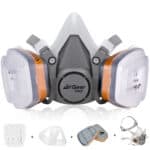
Yes, reusable masks such as the M-500 respirator mask with A1P2 filters are more cost-effective in the long run. They allow you to replace filters rather than buying new disposable masks each time. They’re also better for the environment.
Which respirator is best for me?
The right respirator mask depends on the job:
- For spray painting or working with chemicals, a half-face or full-face respirator with A1P2 or ABEK1-P2 filters gives protection against organic gases and fine dust.
- For woodworking, sanding, or construction, a reusable dust mask with P2 filters is usually sufficient.
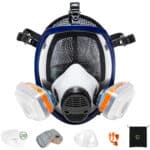
- For maximum protection in dusty or hazardous environments, choose a full-face respirator mask, which also shields your eyes.
👉 Check our Respirator Buying Guide for detailed advice, or contact our support team for recommendations.
What filters do I need for my respirator mask?
It depends on your work:
- P2 filters → fine dust, sanding, DIY projects.
- P3 filters → hazardous dust, welding fumes, silica.
- A1P2 filters → organic gases + dust (e.g. paint, solvents).
- ABEK1-P2 filters → multi-gas protection + dust.
You can easily replace your filters on half-mask and full-face respirators.
Which respirator mask is best for spray painting?
For spray painting, we recommend a spray paint respirator mask with A1P2 filters. These protect against both organic gases and fine paint mists. Our G-500 respirator mask is ideal for full eye and face protection.
Can I use a dust mask for chemical protection?
No — a standard dust protection mask only filters particles like sanding dust or sawdust. For chemical protection, you need a respirator mask with the right filters. Our M-500 ABEK1-P2 respirator is designed for this purpose, offering protection against multiple gases, vapours, and dust in one solution.
Do safety glasses and safety goggles provide the same protection?
- Safety glasses look like regular glasses and protect against dust, light impact, and splashes.
- Safety goggles form a tighter seal around the eyes, giving better protection against fine particles, chemicals, and paint spray.
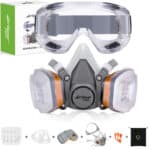
If you wear prescription glasses, we recommend safety glasses over glasses or safety goggles for work.
Can I wear a respirator mask with safety glasses?
Yes — our respirator masks are designed to be compatible with most safety glasses and protective goggles. For full-face protection, the G-750 full-face respirator combines both eye and respiratory safety in one mask.
What is your return policy?
We offer 30-day easy returns. If you’re not satisfied with your purchase, contact our support team and we’ll guide you through the return process. Please make sure the product is unused and in original packaging.
Can I change or cancel my order?
If your order hasn’t shipped yet, yes! Please contact us immediately at support@airgearpro.com with your order number and requested changes.
For Any Other Question
We are here for you!